Seven Ways an AI-Edited CV Drifts Away From the Facts
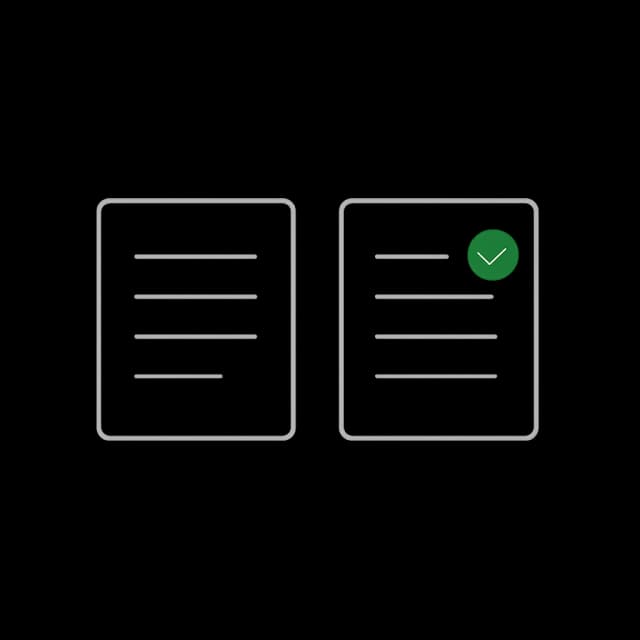
Most CV errors are not elaborate fraud. They are quiet drift between documents, prompts, dates, and polished claims. A structured Career Record makes them reviewable.

The problem is usually drift, not a forged identity
A senior freelancer asks an agent to shorten a CV for a client. The agent merges two projects, rounds a result upward, and turns “supported the migration” into “led the migration.” The text sounds better. It is also a different claim.
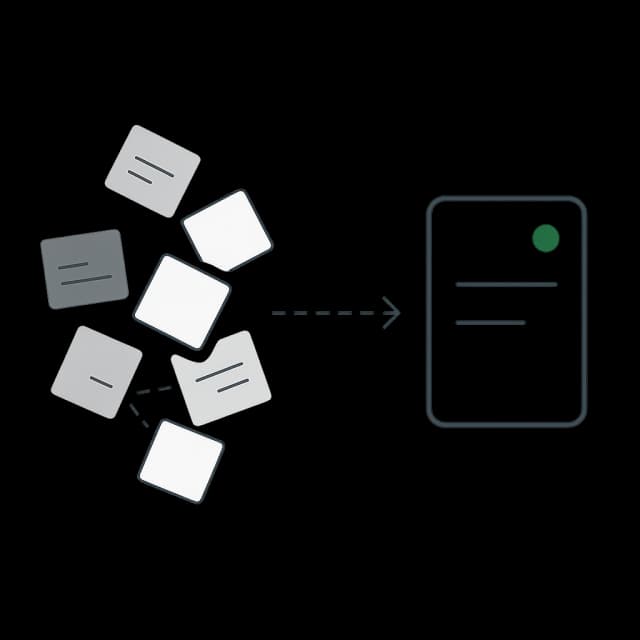
Repeat that across a Google Doc, a website, a PDF, and several agent conversations and the professional no longer knows which version is authoritative.
Seven patterns worth checking
1. Date compression
Month-level dates become years, gaps disappear, and overlapping engagements look sequential. Keep the underlying start and end dates stable even when a short CV displays less detail.
2. Responsibility inflation
“Contributed to” becomes “owned”; “technical lead for one stream” becomes “led the program.” Preserve scope as a fact, not a tone choice.
3. Metric laundering
An estimate becomes an exact number after several rewrites. Store whether a metric is measured, approximate, client-provided, or intentionally omitted.
4. Technology time travel
A current stack is copied into an older project because the agent treats a skill list as universal. Attach technologies to the experience in which they were actually used.
5. Company and client collapse
For contractors, employer, consultancy, intermediary, and end client are not interchangeable. A structured project record can represent the relationship without pretending they were one organisation.
6. Translation drift
The English version gains stronger claims than the German source. Secondary-language fields should be translations of confirmed facts, not a second biography.
7. Output drift
The public profile gets updated, but the PDF in a shared folder does not. Generate both from the same record instead of maintaining copies.
A safer agent workflow
Read before writing
The agent reads the current confirmed record before proposing anything.Propose a narrow diff
Dates, roles, results, and translations change as explicit fields rather than as a rewritten document.Show provenance
The owner can see whether a fact came from an import, a manual edit, or an agent proposal.Require owner approval
The agent that drafted the change cannot approve or publish it.
Verification helps, but it is not magic
A named client or peer can add first-hand context to a specific claim. A public artifact can support another. Neither proves the entire CV, and person.work should not pretend otherwise. The benefit is that evidence stays legible and attached to the work instead of becoming an opaque badge.
The practical standard
The goal is not to make every CV suspicious. It is to make professional memory stable enough that different agents and outputs do not quietly rewrite it. A confirmed Career Record gives the owner a place to inspect those changes and an open format to take elsewhere.